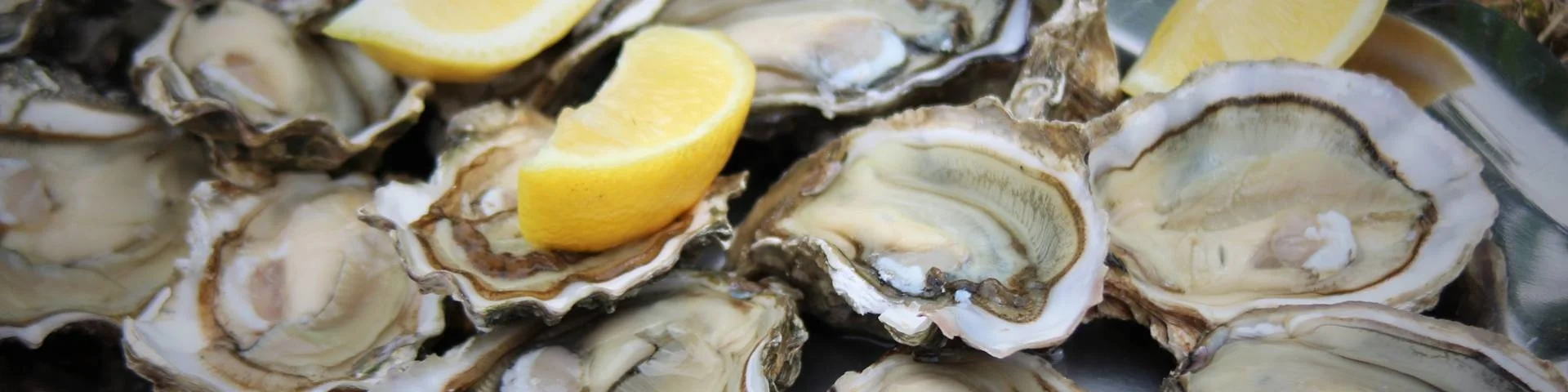
Once the oysters have reached marketable size, some of them undergo a final stage before being put on the market: refining. This is the last biological production stage in the growing cycle, which consists of immersing mature oysters in water before packaging them for marketing. The purpose of refining is to modify organoleptic characteristics, to accentuate shell hardening, and to promote fattening or greening. Three types of oysters are produced on Île de Ré, directly linked to the maturing methods used. It is during this stage that the oyster obtains its distinctive flavour and colour.
The claires
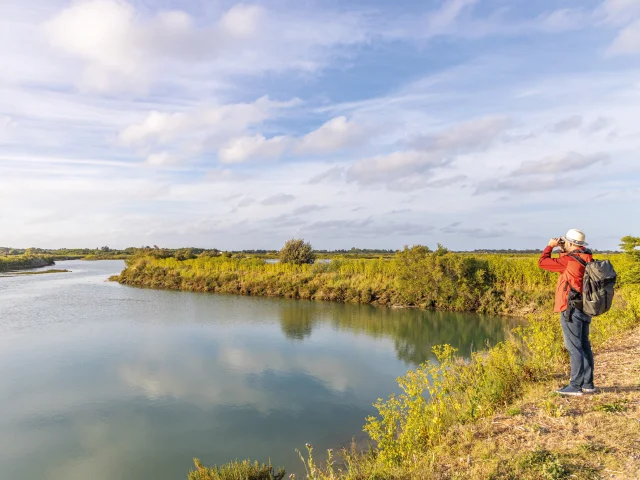
During this final stage, the adult oysters are placed in special production zones: oyster beds, or ‘claires’, maturing basins in less salty water, richer in plankton. These are clay basins in shallow salt marshes, where oysters can acquire a beautiful green colour thanks to the presence of a microscopic algae: blue navicula.
The fines de claires
The fines de claires have a flesh content of over 6.5. They are a favourite with lovers of tender, slightly fleshy oysters with a fine finish on the palate! The water in the oyster beds is purified by lagooning, giving the product exceptional properties: a tasty oyster with a powerful salty aroma to discover.
Whether classed as ‘fine’ or ‘spéciale’, it is the flesh ratio that determines an oyster’s classification. This is calculated by dividing the drained flesh weight of the oysters by the total weight with shells closed, then multiplying the result by 100.
The spéciale de claire
Spéciale de Claire oysters have a flesh content of over 10.5. They are rounder, fleshier and firmer, and mature for a minimum of 4 weeks. They are more generous and longer in the mouth.