What are tides? How do they work?
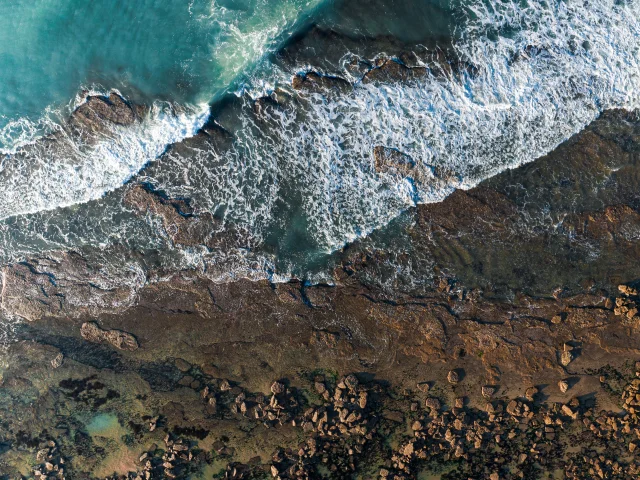
The tide is the rhythmic rise and fall of the ocean and sea. It is caused by the gravitational pull of the Moon and the Sun, and the rotation of the Earth.
In France, tides are measured using a tidal coefficient.
It tells you whether the day’s tides will have a large or small tidal range.
The tidal coefficient ranges from 20 to 120 and is calculated by comparing the height of high tide with average sea level. Any coefficient above 95 indicates a particularly high tide.
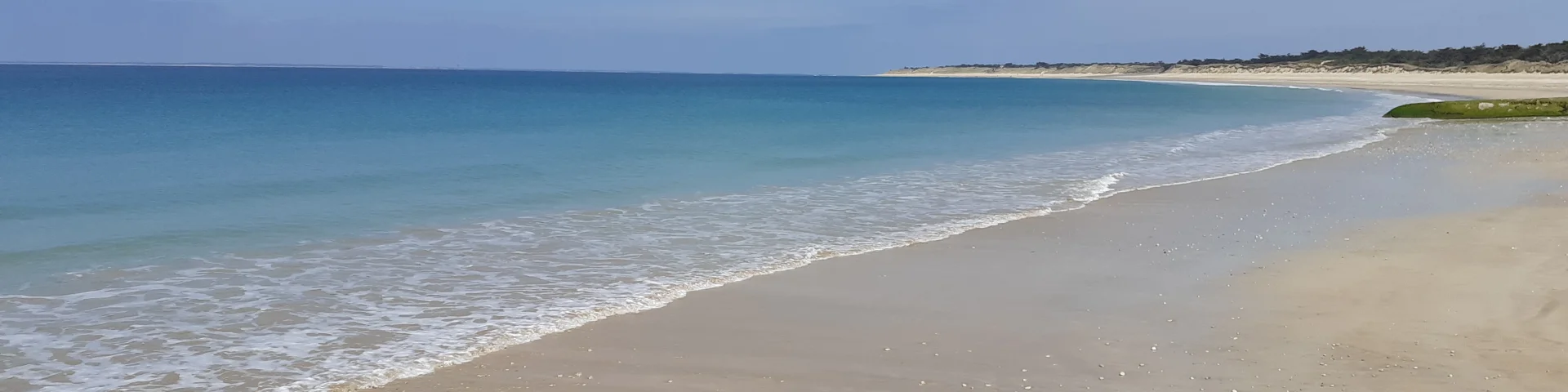
On the Atlantic coast, a typical 24-hour period brings 4 tides: 2 high tides and 2 low tides.
These daily variations open up a wonderful range of activities: at high tide, go for a swim or try your hand at water sports; at low tide, go shore fishing or discover the island’s fish locks; and, whatever the tide, go for beautiful beach walks, build sandcastles or enjoy some sport.