©

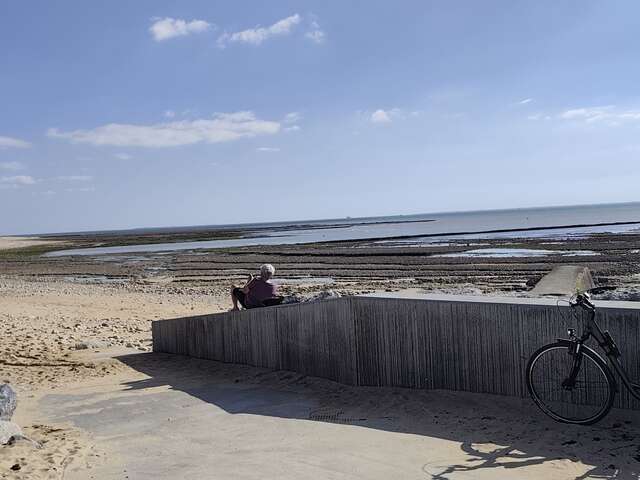
Les Portes Plage Conche 002mathieu Genon

|

Mathieu Génon

Lifeguard-patrolled beaches on the Île de Ré: where to swim safely in summer

Ajouter aux favoris

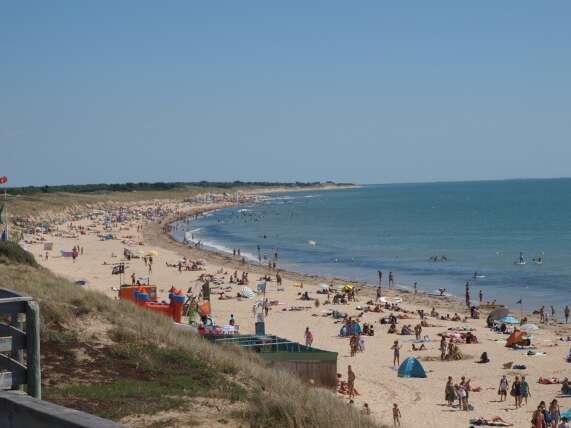
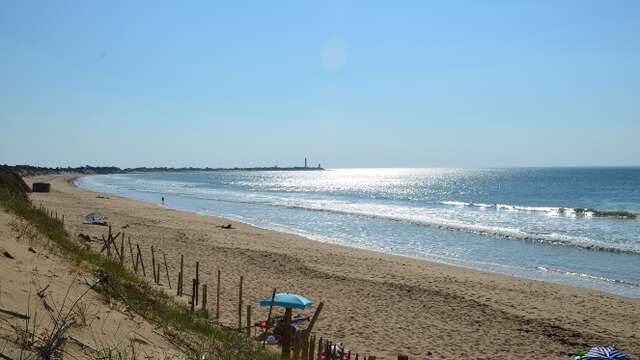
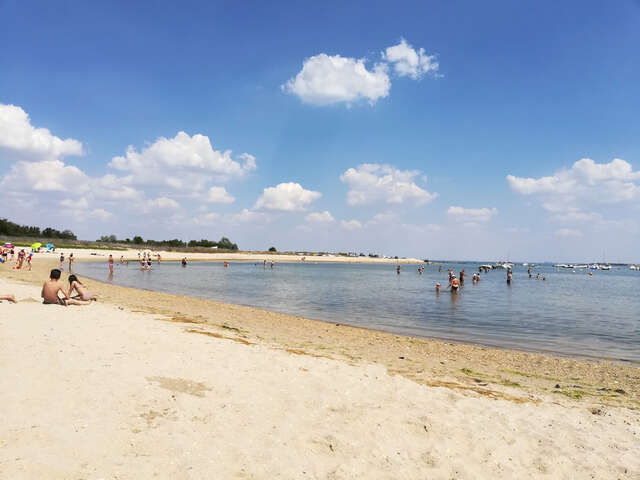
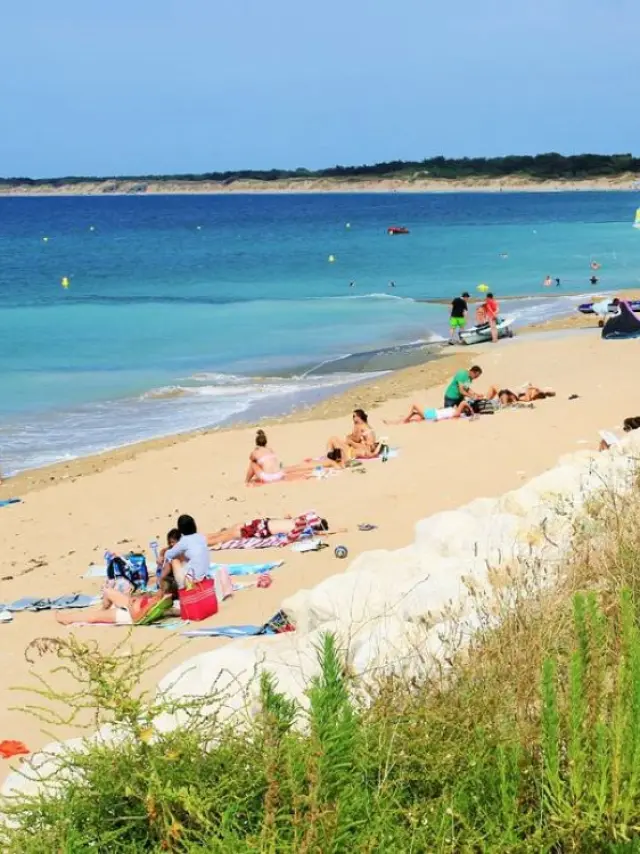
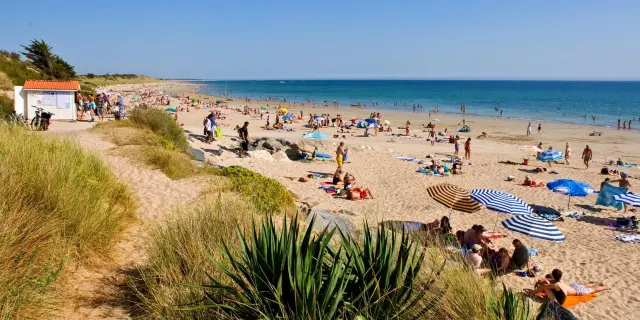
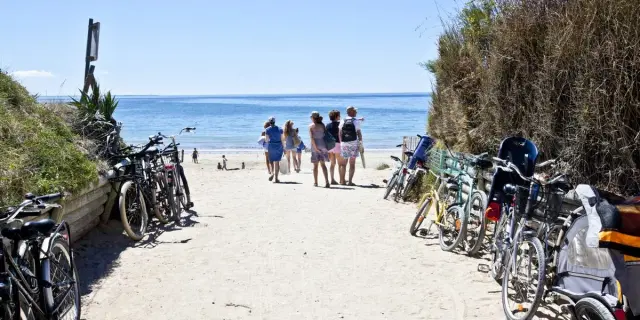
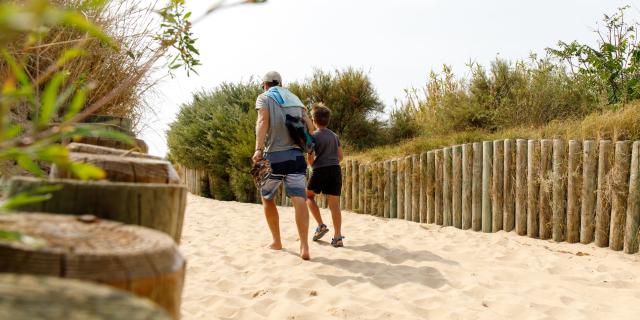
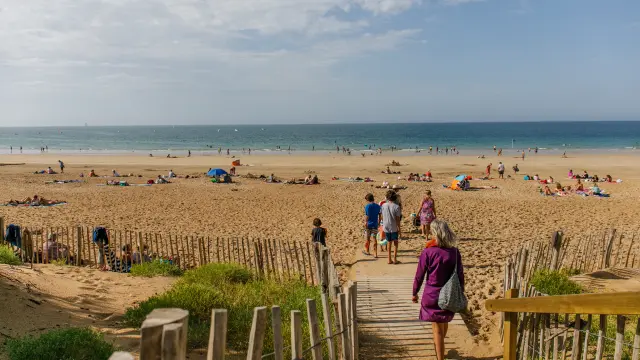
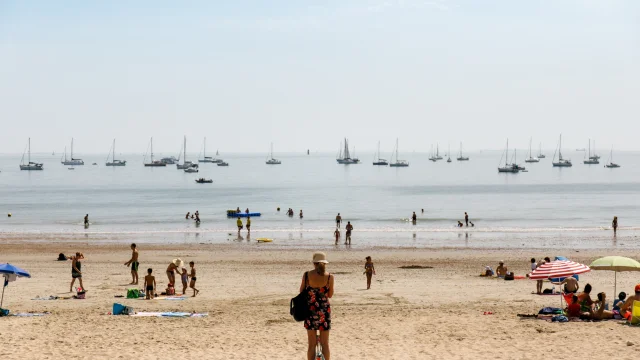
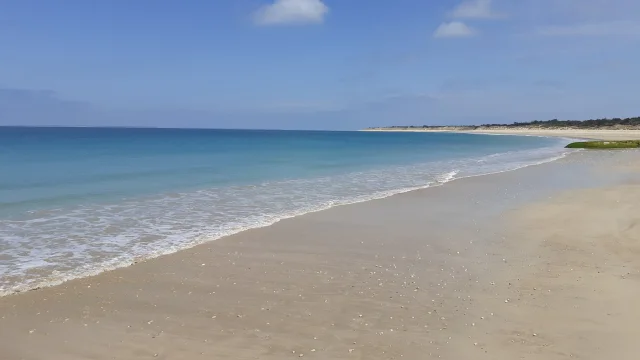
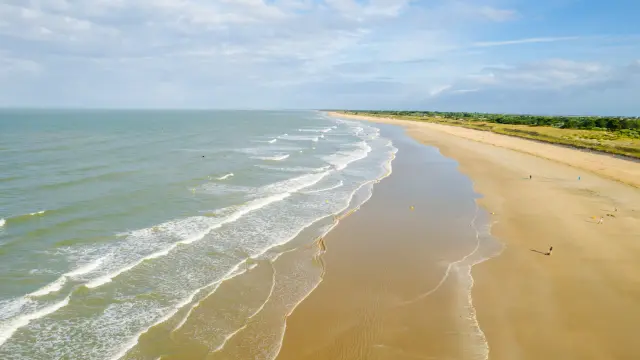
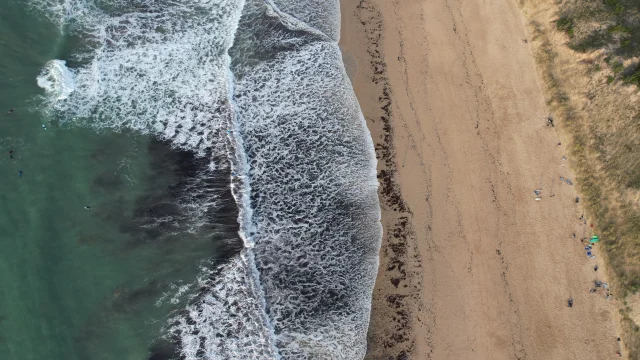
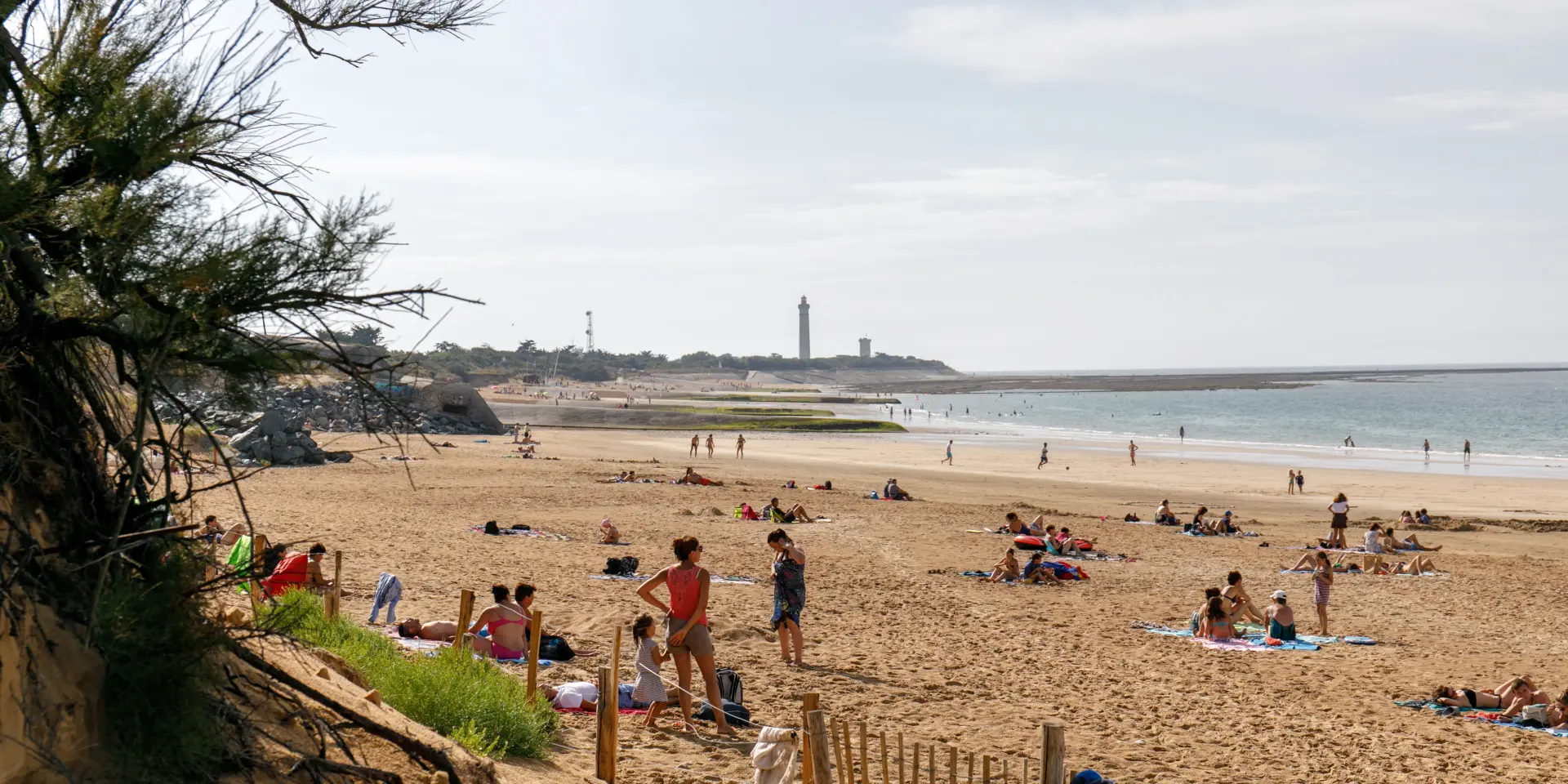
On the Île de Ré, the sea is a constant companion on every summer’s day, offering relaxation, games and swimming. To ensure you can enjoy the sea with complete peace of mind, 12 beaches are lifeguard-patrolled exclusively in July and August. With lifeguards on duty, designated swimming areas and water quality monitored, everything is in place to ensure a supervised and safer swimming experience in a preserved natural environment.

12 lifeguard-patrolled beaches in July and August

In summer, the lifeguard-patrolled beaches on Île de Ré allow visitors to enjoy swimming in a safer environment, thanks to the lifeguard service organised by the local councils. Lifeguards are on duty at the 12 beaches listed below during the summer season to provide information and assistance to bathers.

  • Lifeguard service available in July and August only
  • Opening hours vary depending on the beach (usually from 11am to 7pm)
  • First-aid posts are available on supervised beaches

Outside this period, swimming is still possible but is not supervised. Remember to check sea conditions, tide times and any potential risks before going into the water.
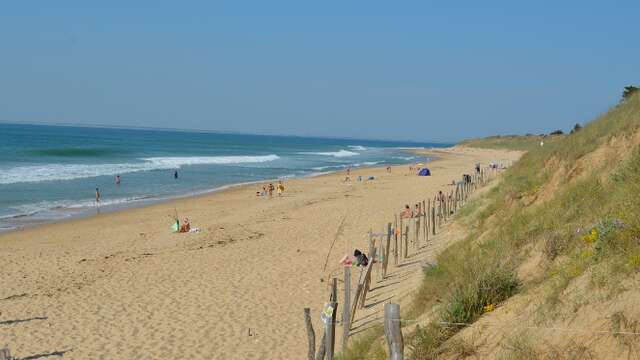
Organised surveillance for your safety

Who is responsible for beach safety?

On supervised beaches, safety is ensured by:

  • lifeguards (SNSM, CRS, fire service, etc.)
  • teams trained in first aid and risk prevention
  • visible and accessible first-aid posts

Their role is to:

  • to monitor bathers
  • to prevent risks (currents, tides, weather, etc.)
  • respond quickly in the event of an incident

Why swim at a supervised beach?

Choosing a lifeguard-supervised beach means:

  • having a clearly marked swimming area
  • reducing the risks associated with currents and tides
  • ensuring extra supervision for children
  • being able to raise the alarm quickly in the event of a problem

It also means behaving responsibly towards yourself and others.

Understanding beach flags

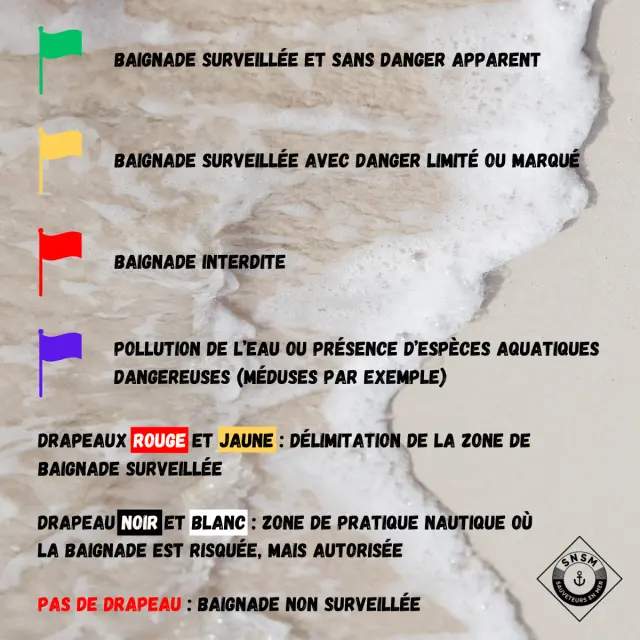
Situated near the lifeguard stations, beach flags (formerly known as ‘flames’) are used to inform bathers about swimming conditions. Their colour indicates the level of caution required, depending on sea conditions, weather conditions and the presence of lifeguards.

Here is what the different flags mean:

  • 🟢Green flag: swimming permitted and supervised (no particular danger)
  • 🟠Orange flag: swimming is dangerous but supervised (limited danger)
  • 🔴Red flag: swimming prohibited and dangerous
  • 🟣Purple flag: swimming prohibited (due to pollution or dangerous aquatic species)
  • ⚫⚪ Black and white chequered flag: area for water sports and boating
  • 🟨🟥Yellow and red flag: swimming area marked by two flags

Supervision is provided only when the lifeguard station is open

If no flag is flying, this means the lifeguard station is closed: there are no lifeguards present to supervise swimming. You swim at your own risk.

Similarly, if the flag is temporarily lowered, lifeguards may be called away to deal with an ongoing incident (sea rescue, assisting a swimmer, etc.). Lifeguard supervision is then suspended.

Before you go into the water, always take the time to check the colour of the flag and follow the lifeguards’ instructions: a few seconds’ attention can make all the difference.

©

2025 12 Snsm Beach Swimming Flags 0

Bathing water quality: regular monitoring

The Blue Flag-awarded beaches on the Île de Ré

The Blue Flag is an international award that recognises beaches committed to high-quality bathing water, environmental protection and sustainable tourism.

On the Île de Ré, the certified beaches are:

  • Le Bois-Plage-en-Ré: Gros Jonc beach and Gollandières beach.
  • La Couarde-sur-Mer: Peu Ragot beach.

Beaches on the Île de Ré certified for ‘Bathing Water Quality’

Several beaches on the Île de Ré are part of the Bathing Water Quality scheme, which guarantees regular monitoring of water quality, up-to-date information for the public and preventive measures in the event of pollution.

During the season, water tests are carried out regularly. You can check the results in real time before going for a swim.

Certified beaches on Île de Ré:

  • Le Bois-Plage-en-Ré: Gollandières, Gros Jonc and Petit Sergent.
  • Saint-Clément-des-Baleines: La Conche des Baleines and Couny.

Essential tips for safe swimming

Understanding the tides

On the Île de Ré, the tides change rapidly:

  • 2 high tides and 2 low tides a day
  • Water levels that change rapidly
  • A foreshore (exposed area) that can extend very far at low tide

What to do:

  • Check the tide times before you set off
  • Avoid going out alone when engaging in activities (such as shore fishing…)
  • Stay alert around rocky areas and channels, which can fill up quickly

Prevent the risk of drowning

A few simple steps can make all the difference:

  • keep a constant eye on children
  • avoid swimming alone
  • enter the water gradually
  • do not overestimate your abilities
  • do not go swimming after a heavy meal or whilst under the influence of alcohol

In the event of an emergency: immediately alert the lifeguards on the beach.

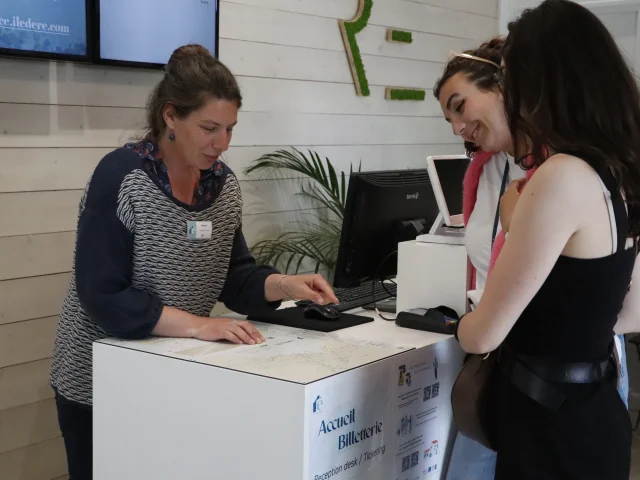
Need some advice? The staff at the Tourist Office are here to help

Our holiday advisers are on hand to help you choose a lifeguard-patrolled beach, understand the day’s conditions and learn the right safety procedures. A handy service to help you enjoy the sea in complete safety.

Based at the visitor centres and always on hand to help, they’ll assist you in:

  • choose a lifeguard-supervised beach suited to your needs (families, children, accessibility, etc.)
  • find out about the day’s swimming conditions (tides, wind, crowd levels)
  • understand the signage and best safety practices
  • plan your day to include swimming, walks and exploring

Our aim: to enable you to enjoy the ocean with complete peace of mind, with personalised and up-to-date advice.

FAQ: Lifeguard-patrolled beaches on the Île de Ré