©

Simon Pallard Fbz Guwdb Y Unsplash

|

Simon Pallard - Unsplash

In Charente-Maritime Enjoy all the activities on offer!


Charente-Maritime abounds in fabulous treasures

Charente-Maritime stretches over 6,864 km² and has borders with five départements.

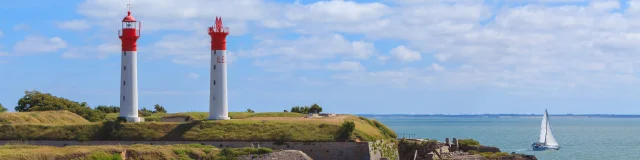
Its Atlantic coastline is the perfect setting: 463 km of coastline, including 230 km on its islands alone: Île d’Oléron, Île de Ré, Île d’Aix opposite Fort Boyard, and Île Madame, all contributing to its charm.

Inland, the département is just as attractive. It’s a land of vineyards, clinging to the hills, from which its local specialities, Pineau des Charentes and Cognac, are made. Its three rivers flowing into the ocean — the Charente, Seudre and Sèvre Niortaise — and its 17 secondary rivers all contribute to the region’s lush greenery and agricultural tradition. The Seudre estuary is the largest wild estuary in France. The most important towns are La Rochelle, Rochefort, Saintes and Royan.

The Charente-Maritime climate is mild in winter, with plenty of sunshine, thanks to the ocean’s influence. It is the leading tourist département on France’s Atlantic coast, and one of the most popular with the French.

At the last census (2021), the département had a population of 661,404. Charente-Maritime is part of the Nouvelle-Aquitaine region.

Tourism in Charente-Maritime

Charente-Maritime enjoys a mild climate all year round, thanks to its location on the Atlantic Ocean and the warm Gulf Stream marine current that runs along the coast. The département enjoys 2,300 hours of sunshine a year, putting it on a par with Corsica and south-eastern France.

The birthplace of Cognac and Pineau des Charentes, the département owes part of its name to the Charente river that flows through it.

Attractions in Charente-Maritime

  • Rivers and estuaries: the Sèvre Niortaise, Charente, Seudre and Gironde estuaries.
  • Islands: Île de Ré, Île d’Oléron, Île d’Aix, île Madame, the Arvert peninsula with Royan, La Palmyre, Saint-Palais-sur-Mer, Vaux-sur-Mer, Ronce-les-Bains, Saint-Georges-de-Didonne, La Tremblade and its inland surrounding area…
  • Towns: La Rochelle, Rochefort-sur-Mer, Saintes, etc.
  • Other seaside resorts include Châtelaillon and Fouras.
Must-see sites in Charente-Maritime

Charente-Maritime preserves and enhances its heritage

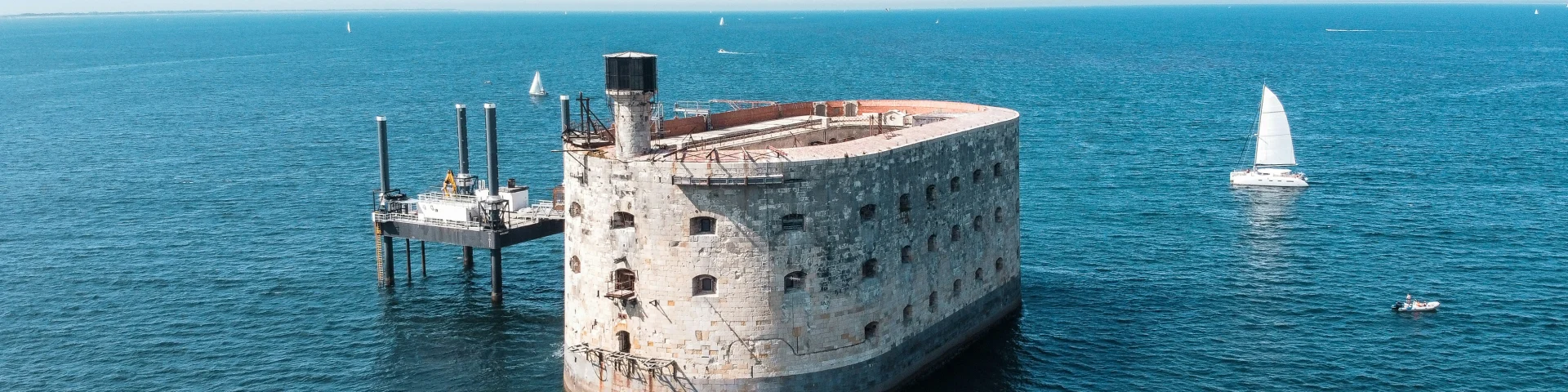
Fort Boyard became a media sensation around the world, in the 1990s, when it became the setting for a game show. Located off the coast of Île d’Aix, the fortress was designed by Vauban in the 17th century to protect the great naval base and dockyard in the town of Rochefort, but was actually completed in the 19th century. Vauban, engineer, town planner and military architect to the King, left his mark. The fortifications he designed for the islands of Charente-Maritime and along the coast tell the story of a major part of French history.

Brouage, a fortified village in the heart of the marshland, 6 km away from Marennes, was once a port for the salt trade.

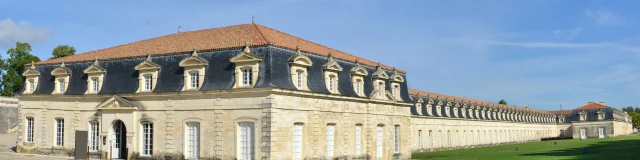
The Corderie Royale in Rochefort is a listed historic monument, known as the ‘Versailles of the sea’. Located alongside the Charente river, the ropes for the King’s ships were made here and the building is longer than the Eiffel tower is high.

This is also where, 20 years ago, the Hermione-La Fayette Association embarked on a formidable adventure to rebuild the Hermione frigate. In 1780, this ship had enabled La Fayette to join the American insurgents fighting for their independence. The splendid replica of the Hermione frigate sailed to America in 2015. How many kilometres of ropes and cables does it have? The ship itself is currently in the Basque Country but you can learn all about it at the exhibition in Rochefort!

Other sites are well worth a visit, and will enchant young and old alike.


La Rochelle Aquarium

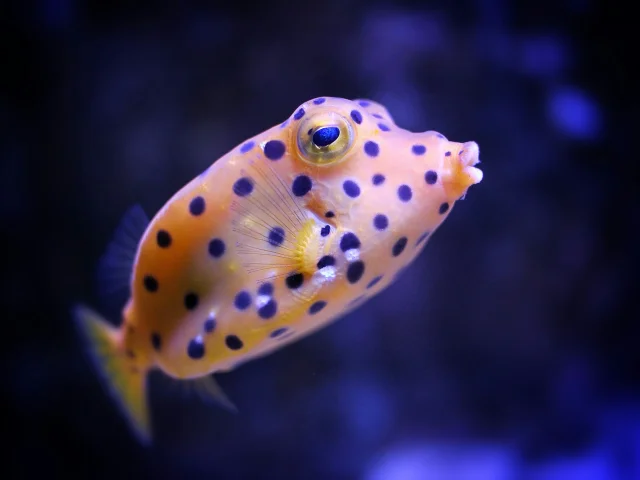
The La Rochelle Aquarium invites you to travel to the heart of the oceans. You’ll discover over 12,000 marine species, incredible biodiversity, and the aquatic world will hold fewer secrets for you.

One of the largest privately-owned aquariums in Europe, it’s a museum teeming with life and an invaluable tool for observing marine flora and fauna.

Gain a better understanding of the ocean, and above all of the notion of biodiversity and conservation — a major challenge for a more sustainable future.


La Palmyre Zoo

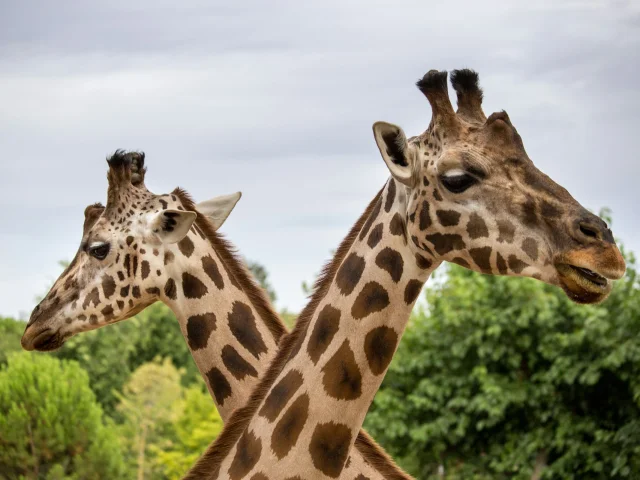
La Palmyre is located on the Arvert peninsula, between Royan and Île d’Oléron. Set in 18 hectares of pine forest, the zoo is laid out like a landscaped garden. Visitors can observe 1,600 animals from 115 species: primates, birds, carnivores, mammals and reptiles. Between 200 and 250 animals are born here each year.

La Palmyre Zoo is involved in numerous programmes to save endangered species. It plays an important role in reintroducing animals into their natural environment, and constantly strives to improve their quality of life. Founded in 1966, it is one of the most visited sites in Charente-Maritime.


The Paleosite

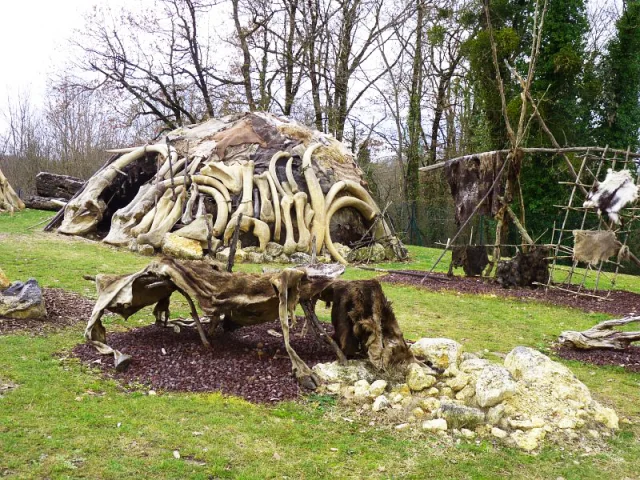
Neanderthals used flint to light fires. 15 km from Saintes, in a 10-hectare park, Paléosite is an astonishing immersion in the heart of prehistory.

The site was created with the support of internationally renowned scientists and the world’s leading Neanderthal specialists. A museographic area, fun and interactive activities and exhibitions take visitors back in time, in the footsteps of the Neanderthals said to be our ancestors.

Just a 2-minute walk from Paléosite, a Neanderthal skeleton, nicknamed Pierrette, was discovered a few years ago. The La Roche à Pierrot archaeological site is still being excavated, and can be visited with a guide in the summer.


La Rochelle Maritime Museum

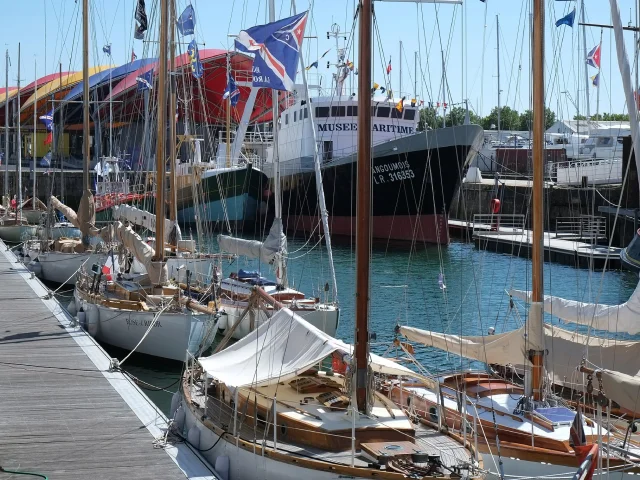
Just a short distance from the old port, in the Bassin des Chalutiers, a fleet that is unique in France is waiting to be discovered. The Musée Maritime de La Rochelle has assembled, restored and maintains a heritage fleet of eight vessels, with the support of the town. Surprises are guaranteed.

The France 1, a weather ship, the Angoumois, a stern trawler, the Saint Gilles, an ocean-going tug, the Joshua, Bernard Moitessier’s legendary ketch, the Amiral Duperré, a command boat, Capitaine de Frégate Leverger, a sea rescue boat, Manuel Joël, the last of the fishing trawlers, the Damien, an exploration vessel, and the TD6, a steam dredger. Some of these boats can be visited.

Exhibitions and children’s activities are organised. A restaurant is even open on the deck of the France 1 during the summer.


La Rochelle Natural History Museum

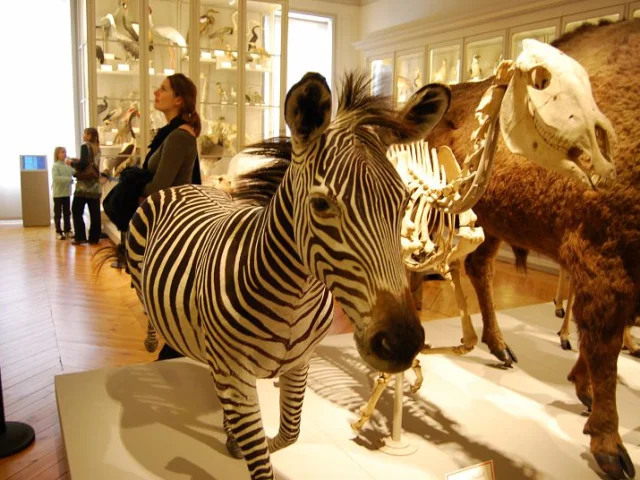
The La Rochelle Natural History Museum is housed in the former palace of the Governor of Aunis. Here you’ll find collections from the four corners of the globe.

Ethnology enthusiasts, science buffs and keen travellers will find it fascinating, as well as those simply wishing to learn more about the world and how it has evolved over time.

Two heritage sites to immerse yourself in Charente-Maritime’s past


The Abbaye aux Dames

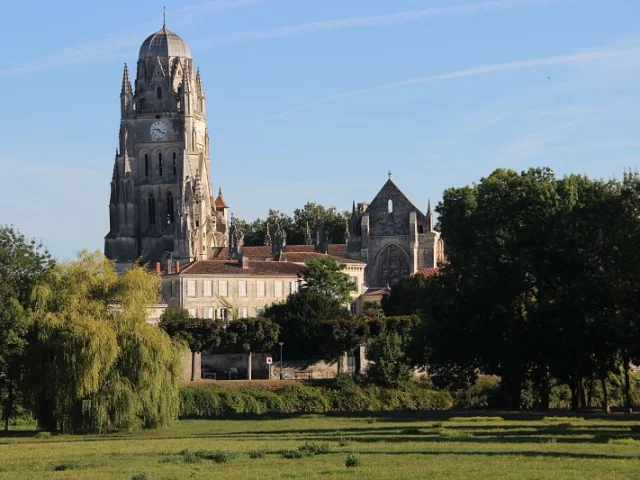
The Abbaye aux Dames in Saintes is a jewel of Romanesque architecture.

The dimensions of this 12th-century building are imposing. Following extensive restoration, a cultural centre has been created.

A true city within a city, the abbey is also listed as a ‘Cité musicale’. Every summer, the Saintes Festival of classical music takes place here.

The abbey once housed between 60 and 80 nuns. Today, the nun’s rooms have been converted into accommodation that can be rented for one or more nights.


The Pilgrims’ Hospital

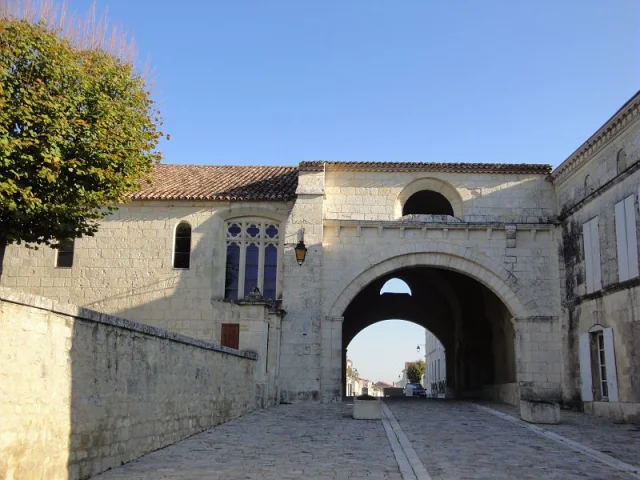
In the medieval town of Pons, the Hôpital des Pèlerins is a former hospice. Built in the 12th century, it served as a stopover for pilgrims on their way to Santiago de Compostela. The vaulted porch still bears graffiti etched into the columns and walls, and numerous sculptures adorn the portals.

Those in need and the sick also came here for assistance, and children were left at the entrance under the porch. Listed as a UNESCO World Heritage Site as part of the Pilgrim’s Way to Santiago de Compostela, it is one of the oldest surviving hospital complexes in Europe.

The building and the remains of the priory church can be visited to discover the history of pilgrimage and hospitality in days gone by. The setting also lends itself to cultural events. The medicinal garden was once the hospital pharmacy. Today, 130 species are planted here — enough to please all herb lovers, in order to prepare remedies, herbal teas and ointments, and to enhance home-cooked meals.