



Each year, the museum offers a "release from storage": a thematic display highlighting its collections and offering an opportunity to discover rarely exhibited works.
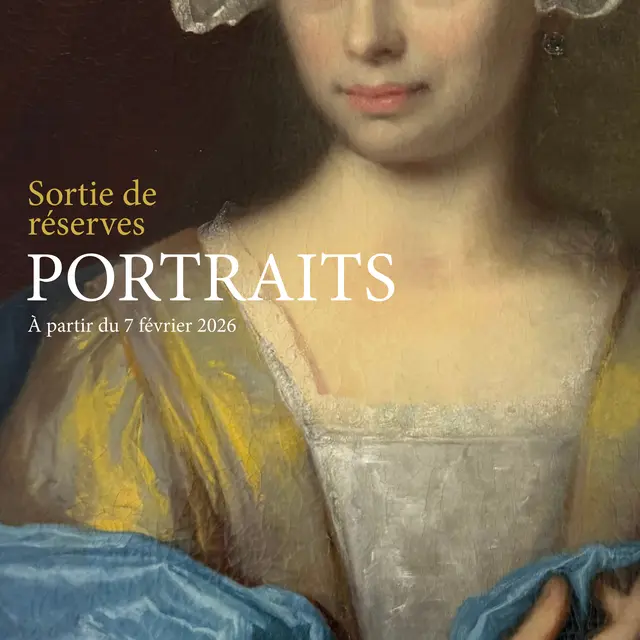
The selection presented today focuses on portraiture: painted, drawn, engraved, sculpted… the genre is well represented in the collections. The original collection of paintings consists primarily of 18th-century portraits, unfortunately anonymous: neither their artists nor their subjects have been identified to date (with a few exceptions).
The history of portraiture is closely linked to that of the representation of the individual. After serving as a means of political and social representation in the 16th century, a function of glorification in the 17th, and then a more psychological function in the 18th, the portrait reached its zenith in the 19th century. Having become accessible to all, family portraits became commonplace in bourgeois homes, like images of success to be passed down to posterity. The genre gradually fell out of favor in the 20th century with artists' growing interest in experimentation and abstraction. The works on display reflect this evolution.
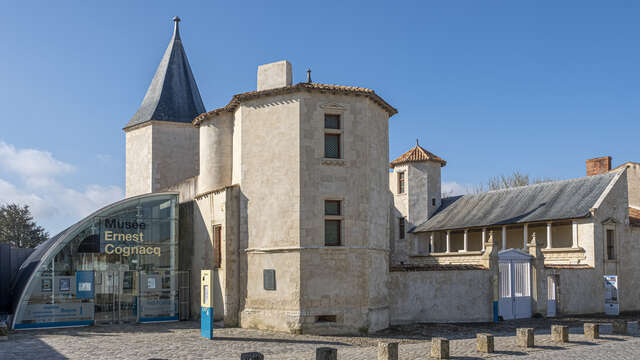
The Ernest Cognacq Museum was founded in 1907, drawing on the art and history collections of discerning collectors Théodore Phelippot and Emile Atgier. Since the 1990s, the museum has focused on enriching its fine arts collection dedicated to the artistic creation of the Île de Ré. Thanks to the generosity of private individuals and the patronage of the Friends of the Museum, works by artists such as Suire, Tatave, Barbotin, Giraudeau, Enard, Patureau, and Drouart have been added to the collections.
The history of portraiture is closely linked to that of the representation of the individual. After serving as a means of political and social representation in the 16th century, a function of glorification in the 17th, and then a more psychological function in the 18th, the portrait reached its zenith in the 19th century. Having become accessible to all, family portraits became commonplace in bourgeois homes, like images of success to be passed down to posterity. The genre gradually fell out of favor in the 20th century with artists' growing interest in experimentation and abstraction. The works on display reflect this evolution.
The Ernest Cognacq Museum was founded in 1907, drawing on the art and history collections of discerning collectors Théodore Phelippot and Emile Atgier. Since the 1990s, the museum has focused on enriching its fine arts collection dedicated to the artistic creation of the Île de Ré. Thanks to the generosity of private individuals and the patronage of the Friends of the Museum, works by artists such as Suire, Tatave, Barbotin, Giraudeau, Enard, Patureau, and Drouart have been added to the collections.