♻ Give brochures a second life!
Did our paper brochures help you plan your trip? They can still be used by others! Before you leave, visit one of our 12 reception points to give them a second life: Pocket Guide, Instants Magazine, bike trail map, village maps, tide tables… we take it all back!”
🌍 The return of migratory birds!
As of August, wintering birds are returning from northern Europe.
Many small shore wading birds come to eat small shells, worms and crustaceans on the beaches and mudflats at low tide. Sanderlings and turnstones are easily observed at the edge of the waves. Be careful, gathered to rest, these species are easily disturbed by dogs and walkers! Be careful to avoid them. On the water, we can also find brant coming back from Siberia. In winter, at high tide, take the path along the Nature Reserve of Lilleau des Niges. Large groups of birds enjoying the quietness of the place can be observed.
🐚Getyour boots on and discover the ‘Ile de Ré at the mercy of the tides
A real voluntarist policy of awareness is financed via the ecotax that each vehicle pays at the entrance of the bridge. This one finances in particular the work of ecoguards. Thus protected, the biodiversity, which a complete inventory has revealed the great richness, is offered to visitors wishing to discover the Ile de Ré in a different light. During the high tides, at low tide, the island almost doubles in size with the emergence of the foreshore, part of the coastline that is discovered. It is a varied landscape where rocky plateaus called banches, boulder fields, mud flats, banks, etc. alternate with each other.
fields of block, mudflats, sandbanks … Field of observation of fauna and flora, and ideal place for fishing on foot, this preserved space is extremely sensitive. We therefore invite you to be very vigilant and to respect its habitats and inhabitants. You will find below all the information, advice and useful contacts for a serene and respectful walk of the place.
🌊 Tides, how does it work?
The duration of a tide is 6 hours,that is, two high tides and two low tides each day. Tides result from the attractive force of the Moon causing the ocean to deform. When the Earth, the Moon and the Sun are aligned, the attraction is stronger: the sea rises higher and falls lower; these are the “high tides” with a coefficient between 80 and 120. When the attraction of the sun is added to that of the moon, the two stars are in conjunction or in opposition. This phenomenon occurs twice a year, in March and September: these are the “Equinox tides.”
🏖️ From the foreshore to the dune: the flora of the seashore
At the top of the beach is the embryonic dune. It is an extremely fragile habitat and must be preserved. It is therefore important not to trample it. The species found there are very diverse: Oyat, Panicaut maritime and Liseron soldanelle.
The part of the coastline that is uncovered at low tide is also called platin on the Ile de Ré. At the bottom of the beach, on the rocky foreshore, you will find only seaweeds: ulva and bladderwrack are the best known. Behind the embryonic dune, is the gray dune, it is the fixed dune.
🦪 Before you go fishing on foot
It IS RECOMMENDED TO:
– watch the time of the high tide and anticipate its return depending on the coefficients and the sites, the fisherman can fish 1 to 2 hours before the low tide and stay until 1 to 2 hours after. Some sites can represent a trap. It is preferable to always go back early and observe the behaviour of other fishermen.
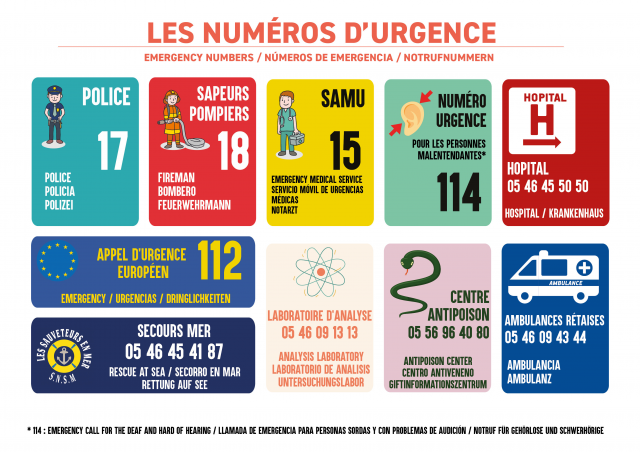
– Have a watch, a charged cell phone and know the emergency numbers: 18 and 196 (Centres opérationnels de surveillance et de sauvetage (CROSS))- Wear tight boots or old sneakers. Do not venture out barefoot.
– Do not leave in case of fog or storm warnings
.
– Do not go at night (shellfishing is prohibited from sunset to sunrise).
In some areas, shellfish are unfit for consumption. You will find all the information on the website of the maritime affairs and with the ecoguards of the Community of Communes. On the Ile de Ré, two sites are forbidden for fishing on foot: the North beach of Rivedoux-Plage and the Banc du Gros sable (Natural Reserve of Lilleau des Niges, North of Fier d’Ars). Also in ports and channels and near port structures.
🐜 Making yourself “very small”
You should leave as little trace as possible of your passage and not waste or destroy anything.What you fish for, you eat, entirely.You fish only for what you like to eat and in quantities that correspond to the need. If one is fishing for the first time, inquire about the conservation of the fruit of his fishing. Some shellfish will need to be drained before you can eat them.
IT IS ESSENTIAL TO
– put the stones and sediment back in place
.
– fill in small holes, avoid habitat destruction
– walk slowly, looking carefully at the landscape
– use soft tools so as not to injure marine organisms
.
– release animals that are too small quickly and especially put them back where they were. Moving them reduces their chance of survival.
– respect regulatory sizes, measure animals one at a time.
TOOLS
A pair of gloves,
An oyster pick and
possibly a clam probe.
No use of: the fergeon or whale
.
for knives, hammer and chisel, shovel, arrow or rake.
The essential tools: the ruler and the scale.
Each fisherman is allowed to take 5kg /day.
Some species have additional restrictions (quantity
max): Cockles: 2kg / Praires: 3kg / Clams: 200 units /
Spiders: 6 units / Bunch: 2kg
The ruler and the practical guide of fishing on foot are available in the 10 Welcome Offices of Destination Ile de Ré. Find all the information on cdc.iledere.fr or contact ecoguards: 05 46 09 68 65
🐦 Nesting birds: fragile attention!
In April, May and June, nesting birds settle everywhere on the Ile de Ré. On the beaches too! The Gravelot with interrupted collar settles on the tops of beaches. Its very discreet nest makes it vulnerable. It can be trampled if we don’t pay attention. The collection of waste on the tops of the beach at this time of year is to be prohibited or carried out with caution, so open your eyes!
At each high tide, the sea deposits plant and shell debris (as well as trash) at the top of the beach. This is the sea leash. It is extremely important for many birds to find food or hide in. Beach cleanups should be limited to anthropogenic trash.
🐟 Foreshore flora and fauna
Foreshore animals and plants are sometimes composed of seawater. They have a vital need for this element and find themselves dry during the hours of low tide, day and night, in summer and winter. These organisms have adapted: oysters, limpets, mussels close their shells at low tide to conserve water. Clams, razor clams or razor clams sink into the sand or mud to stay in a humid area. Crabs, shrimp, sea snails and fish hide under rocks. Algae and anemones gorge themselves on water to survive. All of this little world waits for the sea to rise again so they can come out and resume their activities.
On the foreshore there are:
MOLLUSKS (soft with or without shell)
paddlefish or “Chinese hats
littorines, periwinkles
mussels, scallops, oysters (bivalves)
clams, cockles and razor clams (bivalves)
razor clams (foreshore bivalves
sandy or rocky foreshore)
cephalopods (for example: cuttlefish)
CRUSTACES (articulated body covered with a carapace)
shrimp
crabs
(curler, green crab, spider crab, Dungeness)
ECHINODERMS (move by feet with suction cups)
bears (mostly herbivores)
starfish (feeds on mollusks, crustaceans)
CNAIDS
medusas
anemones
FISHES OF THE ESTRAN
blennies
gobies
goby door
old
motelles
The ANNELIDES
.
to
Discover beautiful architectural achievements built by “builder worms” using grains of sand. They are favourable habitats for many species and are easily observed on the beaches of the south of the island.
📌 100% local recipe idea: mussel éclade
Materials:
– 1 wooden board (oak if possible 35×35)
– 4 nails
– 1 liter and a half of mussels
– pine needles (found in the woods of Ile de Ré)
Plant the 4 nails in the centre of the board.
Arrange the mussels in a rosette starting from the 4 nails in the centre of the board to be returned outside (point in the centre and flat side of the mould below, so as not to have ash in cooking).
Once the board is covered with mussels put it on the grill of your barbecue.
Gently place pine needles on top of the mussels, you need a good thickness of them!
Set the pine needles on fire, the mussels will open up and take on a nice smoky, piney taste.
Serve with a small glass of wine.
Accompany with a small glass of white wine from the Ile de Ré (to be consumed in moderation).
Happy eating!
📌 Idea 100% local recipe: cockles and/or clams
– 1kg of cockles
.
– 1kg of clams
– 4 tablespoons olive oil
– 30 cl of white wine from Ile de Ré
– 1 onion
– pepper, civet, lemon
Well wash and/or drain if necessary the cockles and clams. In a large casserole dish heat the oil, sauté the chopped onion without colouring, add the shellfish, civet, lemon cut into thin slices, season with pepper and pour in the white wine.
Cover and cook for 10 minutes, the shellfish are cooked as soon as they are opened.
Serve as soon as cooked.
Little extra tip: it’s even better if you’re the one who catches them :-)!
Happy eating!
🐟 Fish locks, fragile attention
You’ll be surprised by these long stone walls that snake across the rocky foreshore. These fisheries, whose origin dates back to the distant Middle Ages sometimes reach several hundred metres. For about 115 locks in 1727, only 14 remain today located in particular in Sainte-Marie-de-Ré, Saint-Clément-des Baleines, Les Portes-en-Ré, Ars-en-Ré and Loix.
These locks bear witness to a fishing method that is in the process of disappearing. They are all the more threatened, as this fragile heritage requires constant vigilance.
The lock fills when the tide rises. The fish or shellfish move with the rising tide currents, into the fishery. Then, on a falling tide, the fish follow the current, guided by the lock wall. The trap is then set. Evacuating the water at ebb tide.
⛔ It is forbidden to fish and to enter within 25 meters of the fish locks, just like for the oyster or mussel farms. The best way to discover these historic fisheries is to participate in the tours offered by the Verdonnais and the Ancre Maritaise.
Information at all 10 welcome offices
.
Learn more at www.adepir.fr
Coastal angling
Surf-casting (“angling in the wave”)is one of the sea fishing techniques practiced from rocks, beaches, or seawalls.
Unlike freshwater fishing, there is no need for a permit to fish at the seashore, day or night. But sometimes some areas (marina or other) may be prohibited for different reasons (sanitary for example). It is therefore advisable to find out about the regulations in force. Recreational marine fishing is regulated and takes into account the sizes, quantities, closing periods depending on the species.Respecting these rules helps preserve the marine resource. Small juvenile fish, for example, must be released to allow them to reach maturity to reproduce. For example, we fish for Sea Bass from April to November, Mullet in May and June and then in December and January and Sole rather in the summer and fall.
Caution
Surfcasting requires special vigilance for waves, and for water holes that can be several feet deep. Even fishing from a seawall or slipway deserves monitoring of sea and swell conditions.
For more information: www.apnr.fr and our dedicated flyer here.
🚭 Final little tips:
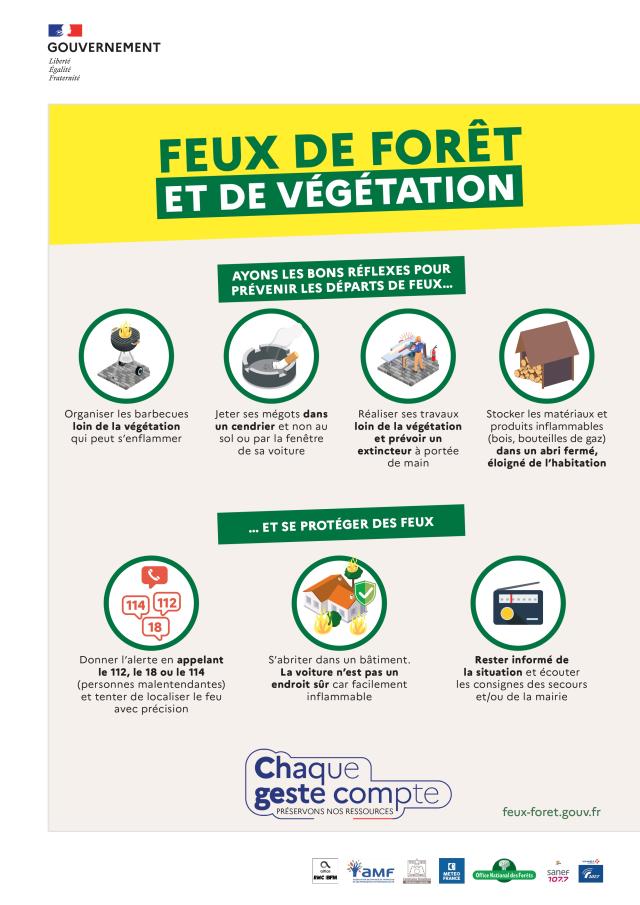
Smokers: don’t throw your cigarette butt out the car window, don’t bury it in the sand, don’t throw it on the sidewalks or in the streets, in the forests, because very soon they will end up in the sea 🌊, or cause a fire 🔥. Please bring a beach ashtrays or a specific box before leaving. We also distribute free beach ashtrays at our Bois-Plage and La Couarde Welcome Offices.
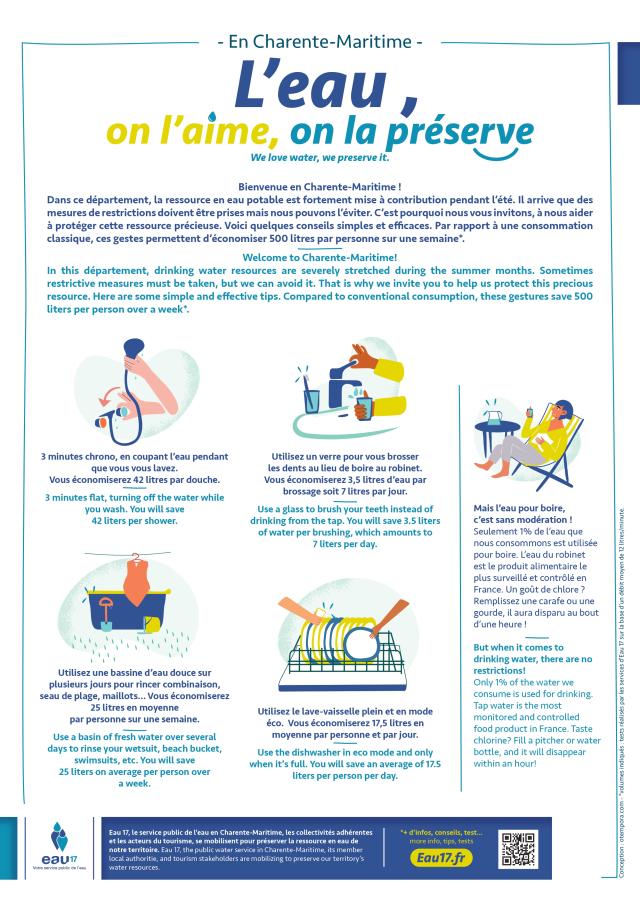
⛲ Be careful with water resources: showers, tooth brushing, washing machines and dishwashers on only when full, favour dishwashers over hand washing…
Sorting waste on the Ile de Ré: find the collection schedules, voluntary disposal points, glass bins, paper on our dedicated sectionhere!
📱 Download the “My Sort“app and make your life easier, to sort properly and not miss the pickup 🙂 It’s throughhere!
On the Island of Ré, ecoREsponsible gestures, are cultivated all year round!
🚲 Biking IS GOOD FOR HEALTH AND NOT JUST…!!
A network of 138 km of bike paths as well as a network of shuttles and buses allow
to leave your car at rest! Find the map of cycling routes: iledere.com/velo
🥔 BICYCLES ARE PRACTICAL AND SO MUCH BETTER!”
The island’s producers will be delighted to share their expertise and taste their specialties. In any season, there is something for everyone!
📷 LEAVE ONLY DRAWINGS, TAKE ONLY PHOTOS
⚠️ NATURAL AREAS ARE FRAGILE ALL YEAR ROUND
I walk to the beach using the designated accesses. During my walks on the foreshore or on the paths I respect the ecosystems. More info: cdc.iledere.fr or contact ecoguards: 05 46 09 68 65
♻️ Waste sorting is also done during the vacations!
Tide bins are present at the entrance to many beaches. You can drop off any trash found along the shoreline.