Flowers and plants on the Ile de Ré

🌼 The main flowers and plants you’ll encounter on the Ile de Ré!


Rose Tremiere 164726
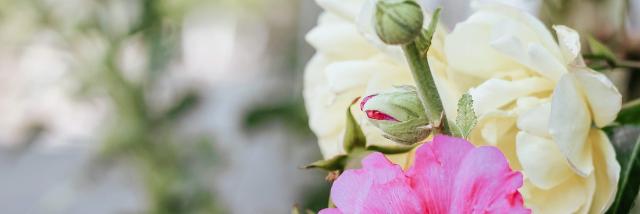
The Hollyhock! The emblem of the Ile de Ré! Perennial, it can be admired from June and all summer
1200px Ammophila Kalfamer
The Oyat, you’ll come across it everywhere around the beaches. Be careful not to trample it allows to maintain the sand and to fix the dune thanks to its roots!
Wilde Malve Am Donaudamm
Scots Mallow: from the same family as the hollyhock and just as widespread, its leaves and flowers are edible, raw in salads or then cooked, either in soup or as a vegetable fondue:)
Aymjdc6z11c00c0ocoskwogko Full 12128427
Sea fennel: it grows exclusively on the coast! Around here, it’s often called “rock drill” 🙂
Ob E8295c W Jeb11438 Copy Medium
Wild asparagus for the lucky ones! Yum Yum with their feathery appearance. The tender young shoots are eaten in spring. The harder stems are bitter and its red fruits are poisonous.
Unnamed
Datura: you’ll often come across it around the bend in a marsh. You can recognize it with its trumpet-shaped flowers and its prickly fruits. Beware, this plant is poisonous!
Unnamed (1)
The maceron: very common at the edges of roads, paths and in ditches. The Romans already consumed this plant! Once dried and crushed the small seeds replace the pepper, the roots are also consumed, delicious and 100% natural!
Eryngiummari 4

Maritime panicum or blue thistle: one of the most emblematic floral species of the French coastline, especially sandy coasts, but it is regressing due to coastal overuse. It has become the emblem of the Conservatoire du Littoral! To be protected!
Image
Wild carderan: the arrangement of the leaves forms a bowl in which rainwater can collect, hence the name “bird’s nest.”
55ckhc7mmrpxwj3tu 6mwcx7em8
Common Viperine: it is widespread in most temperate regions of the world. It can be toxic in high doses, especially to livestock.
Ob 5dfbd3 Blaskstonia Perfoliata 2
Perfoliated blackstonia: you can recognize it by itsyellow flowers, which have 6 to 10 petals!
Wild Carrot Flowers
Daucus carota or wild carrot: its roots smell like carrots!
Unnamed (2)
The dune bindweed, sand bindweed, bindweed, or sea bindweed (Calystegia soldanella) no less! Be careful not to crush it 🙂
Cultivated Plants 7294 Gaillet Des Sables
Gaillet Des Sables: a small creeping plant of our dunes, blooming bright yellow in June 🙂
Small Burdock 2 Arctium Minus Visoflora 40935
Small Burdock: it would be summed up by “everything is in nature”, it is THE “velcro” plant par excellence! its little hooks adhere to your clothes!
Toxic Plant Flowers Of Senecon Jacobee
Senecon jacobea: its repeated consumption can be very toxic to the liver of animals such as horses or cattle. It is, however, food for some caterpillars!
Obione Sauvage 800x544
Obione: can be eaten raw or cooked, a little salty and crunchy taste guaranteed! It colonizes the mud of salt meadows, marshes…
Helichrysum Italicum
Dune Immortelle: it gives off a spicy, warm scent that can remind one of sugar, or coffee
Photos Vendée Dune Carnation Dunes 2014
Carnation Dunes: blue-green stems, short, stiff, nearly flat leaves. 1 to 3 flowers develop at the top of the stem. Odorant, they are often pink, more rarely white

Other plants and garden flowers prevalent on the Island:

Salicorn: grows in sea salt rich soils. Tender edible shoots. Confit in vinegar, as an hors d’oeuvre, or in omelets, in salads.. It can also be prepared like green beans.
– Bigone (climbing plant with red/orange trumpet flowers),
– Agapanthus (long green stem, blooming at the top of a very beautiful blue),
– Miscellaneous common species: dandelion, daisy, plantain major, lanceolate plantain, nettle and lamb’s-quarters…